


ViSS progresses towards sustainable plastics solutions
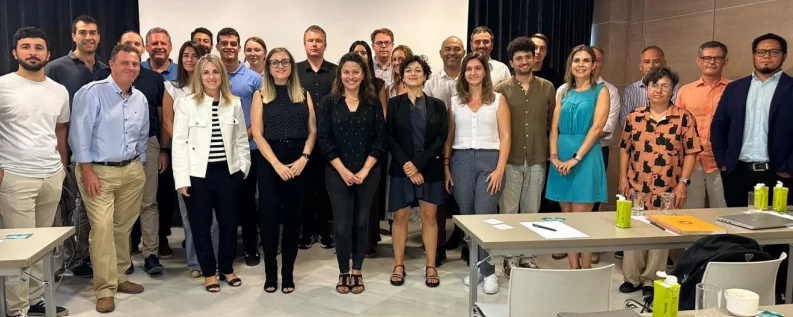
The consortium partners met in Sevilla for the Third General Assembly
The gathering was an occasion for reviewing progresses after the first year of the project and planning future actions. The focus was on evaluating the work’s current status, from residues management to PHBV formulation processes.
Updates were shared on the optimisation of fermentation processes for the production of PHBV, which will be a constituent of the final plastic product. Preliminary plans for PHBV formulation, compounding, and small-scale validation were discussed. The project is using different techniques to identify optimal approaches at a small scale. Mathematical modelling is playing a key role in supporting industrial scaling and facilitating decision-making.
The project coordinator, José Antonio Plaza, emphasizes the importance of this milestone in leading the project towards new achievements:
ViSS project is advancing towards the upscaling of PHBV production processes while applying novel approaches across the whole value-chain, which will further help decarbonise the plastics industry while making it safer and more economically and socially sustainable.
Indeed, the project’s results aim to develop a sustainable bio-based and biodegradable plastic that meets the requirements of various applications, such as short shelf-life food packaging. This plastic avoids the use of hazardous substances, ensuring they are non-toxic while preserving the biodegradability of PHBV, in line with the Safe and Sustainable by Design (SSbD) framework, which also addresses the social readiness and marketability of ViSS novel solutions.
ViSS is advancing towards a circular business model representing a shift away from fossil-based plastics in food packaging.
Photo credits: Juan Antonio Pavón Losada
ViSS strategy for a SSbD framework in the production of bioplastics
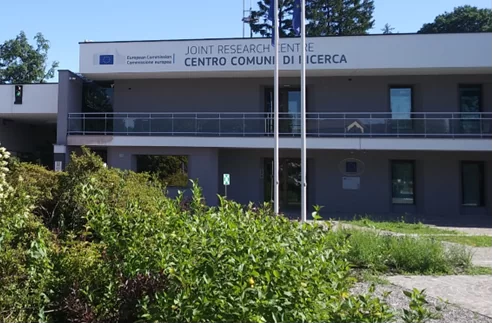
Last week, the project partner Kveloce presented the Safe and Sustainable by Design (SSbD) framework which will be used to address the social readiness and marketability of ViSS novel solutions. The presentation was held at the Joint Research Center (JRC) in Ispra, Italy.
SSbD leverages the existing approaches to provide indicators, methodologies and tools for safety, environmental, social and economic assessment of new products. With this purpose, Kveloce has been working together with other project partners, IDENER and VTT, on the ViSS SSbD framework. This framework will be followed to assess ViSS novel solutions on food packaging bioplastics to assure that they fulfil SSbD standards, thus contributing to the acceleration of the circular economy transition through innovative, safe and sustainable materials.
In the meeting, the importance of designing practices considering the tri-dimensionality nature of sustainability (environmental, economic and social) was highlighted. Indeed, ViSS SSbD strategy is focused on balancing criteria across the full material cycle, from design to end-of-life of the PHBV value chain.
Photo credits: José Benedicto by Kveloce
The ViSS value chain is making its first steps
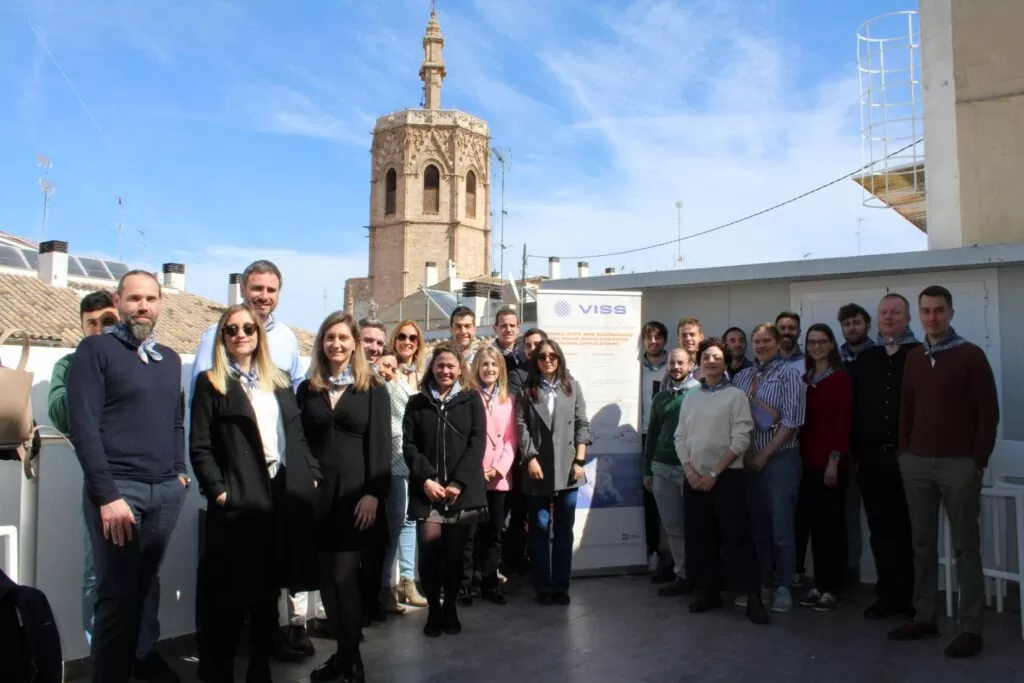
At the first sign of the upcoming spring, the second General Assembly of the European project took place in Valencia on March, 6 and 7th
The meeting served as a fruitful occasion for partners to share updates, exchange ideas and pave the way towards the next phase of the project. More specifically, ViSS partners had the opportunity to look more in detail at the technical specifications required for the ViSS value chain. They also discussed processes to optimize PHBV production, considering the industrial upscaling necessary to facilitate decision-making.
The Consortium had also the chance to go through the principles and categories of the Safe and Sustainable by Design (SSbD) Framework, as well as the development of the ViSS ICT platform.
The second day began with two interesting workshops, one, aimed to introduce the methodology towards the identification of the Key Exploitable Results library and, the second one, covered data and ethics requirements. All partners were then interviewed in videos to raise awareness of their contribution throughout the new ViSS value chain.
In line with the project’s mission, these two-day meetings revamped the partners’ full dedication to make the necessary technical steps ahead and towards the establishment of the new value chain of the ViSS project.
#CircularWasteEU: advocating for a zero-waste future
ViSS together with other EU-funded projects is supporting the International Day of Zero Waste 2024
ViSS is not the only project at the forefront of promoting new sustainable consumption and production patterns. The project, committed to creating biodegradable and recyclable plastic packaging, is teaming up with other European projects such as K-CCRI, Woodcircles, Reconstruct, Agro2Circular, Plastice, Walnut, B-ferst, and CULTIVATE, to launch the #CircularWasteEU social media campaign. This initiative aims at promoting responsible production and consumption, thus amplifying efforts to raise awareness on this crucial issue.
The campaign is set on March 30th, aligning with the International Day of Zero Waste 2024, a United Nations (UN) initiative started in 2022 to promote effective waste management practices and reduce waste generation. The initiative emphasises the impact of simple actions within everyone’s reach to increase a zero-waste society.
With this purpose, ViSS will publish a series of short videos where each European partner will explain how circularity potentially guarantees a zero-waste world in daily work. Trying to reach as wide an audience as possible, the social campaign seeks to involve all parts of society requiring full collaboration between governments, communities, and industries.
Advocating for change is an essential part of driving the green transition forward. Be an actiViSSt! Join us on LinkedIn and X, and learn how you can help create a more sustainable future.