


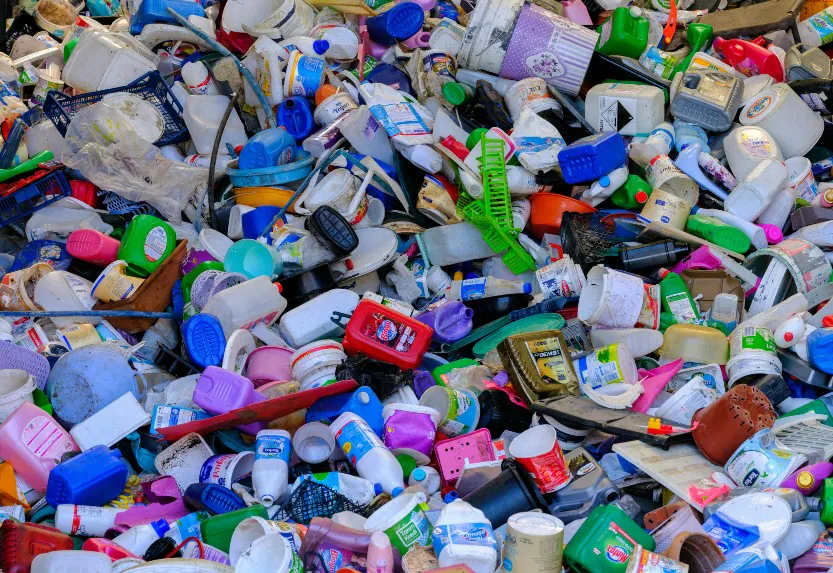
The bioplastics gap: Europe races to catch up with Asia
Bioplastics sector is expanding rapidly, but Europe still lags far behind Asia. The bottleneck is not innovation, but industrial scale-up and competitiveness. This is why an EU-funded project aims to create the conditions for market uptake.
By Gioia Salvatori
Bioplastics account for just 0.5% of the nearly 414 million tonnes of plastic produced annually, but the sector is expanding rapidly, driven by rising demand and advancing technologies. Global bioplastics production capacity is expected to double, from around 2.47 million tonnes in 2024 to approximately 5.73 million tonnes in 2029. Some regions have already taken the lead: in 2025 Asia continued to dominate global bioplastics production capacities, holding about 55 %. Europe, however, is set to increase its share from 14 % to 17.2% by 2030. If the reasons behind Europe’s lag are relatively clear, the path to catching up remains far more uncertain.
Bioplastics production: the reasons behind Asia’s advantage
China is at the forefront of Asia’s bioplastics industry together with India, Japan, Thailand, Malaysia and Indonesia. The reasons are structural, according to Michael Carus, one of the leading experts on the global bioplastics market, the founder and former CEO at nova Institute (Germany). China’s ability to anticipate future markets, combined with strong state support for strategic sectors, has enabled it to invest early in export-oriented industries linked to the green transition, from batteries to solar panels and biotechnology. From a technical standpoint, scaling up renewable plastics production requires “relying on three pillars: bio-based production, CCU (Carbon Capture and Utilisation, a process that captures CO2 emissions and converts them into valuable products), and recycling. And China is strong in all three”, Carus says.
Europe, by contrast, faces a different reality. “In Europe there is not a lot of support. We have support in research and development, but we have almost no support in market introduction. So that means we have so far no quotas or similar incentives for those products, in contrast to other regions of the world such as India”, Carus underlines.
Beyond industrial policy and cost competitiveness, is the availability of raw materials a factor contributing to Asia’s advantage? “Of course, in Asia they have good biomass availability. That’s true. For example Cassava, a starch crop, sugar cane, castor oil”.
… but, on the other hand, Europe is not so short on biomass. “For example – Carus explains –, starch is a very important raw material for plastic and we have plenty of wheat and corn production here in Europe. What’s needed is a change of mindset: cultivation for industries must not be taboo anymore. Most experts think it’s a good idea to use 5–10% of food crops for industrial applications to have such emergency reserves in the back (…) Agriculture has always supplied both industry and food; this has been the case for thousands of years”.
This remains a contested view among bioeconomy experts, reflecting broader tensions between food security and the industrial use of biomass.
The European system: rethinking the value chain
So, could a strategy blending recycling, CO2 utilisation and biomass production work as effectively as in Asia to boost the European bioplastics sector? For Carmen Fernández Ayuso of CETEC, the challenge goes beyond materials alone. In her view, Europe still needs stronger coordination across the bioplastics value chain if it wants to improve competitiveness. Key issues include industrial scale, speed of deployment and manufacturing. “To close the gap, Europe needs not only more material production, but also stronger alignment between polymer producers, converters, brand owners, regulators and end-of-life systems. If those parts do not evolve together, market adoption remains slow. So, overall, I would say that the main difference between Asia and Europe is the one of the industrial scale-up. Europe knows how to innovate; the real challenge is scaling that innovation into competitive production and market uptake”, Fernández Ayuso says.
ViSS project: creating the conditions for realistic market uptake
From Murcia, Spain, Carmen Fernández Ayuso coordinates the European ViSS project, which is developing biobased and biodegradable PHBV plastic from poultry and sugar-industry residues through a non-sterile fermentation process.
The project aims to demonstrate the feasibility of this value chain for food-packaging applications. A PHBV poly (3-hydroxybutyrate-co-3-hydroxyvalerate) pellet has already been developed in Spain with 10–15% and 20–30% 3HV (3 Hydroxyvalerate) content, which is relevant because it allows material properties to be adjusted to different packaging requirements. The project has progressed beyond early laboratory work, with feedstocks validated, pilot-scale production achieved and the demo plant under development. The next stages include scale-up, packaging demonstrators and industrial validation.
If timelines are held, pilot demonstrators could launch by June 2026 through industrial partnerships. Then an Italian firm will produce trays and films, while Alicante’s tech centre pioneers mesh bags.
Fossil-based polymers still retain a major advantage in production scale, installed capacity and cost competitiveness. “I wouldn’t say the market entry challenge is solved yet, but ViSS is building the right conditions for realistic market uptake: pilot-scale production has been demonstrated, formulation work is producing promising results, and industrial packaging validation is built into the later work packages”, Fernández Ayuso says.
“Safe and sustainable by design”: debunking the illusion of cheap fossil-based plastics
Cost remains the central obstacle. PHAs-based bioplastics, such as those developed within ViSS, can cost between two and four times more than conventional plastics or even more.
For José Benedicto, Senior R&D Consultant and Sustainable Development Researcher at Kveloce, a ViSS partner, this price gap is misleading. “Conventional plastics remain artificially cheap, as their environmental externalities are not priced”, a distortion that, he argues, can only be addressed through a systemic shift towards a Safe and Sustainable by Design (SSbD) approach. This approach embeds four dimensions from the earliest stages of material design to the end of life: “safety, environmental sustainability, social sustainability and economic sustainability (…) The externalities of conventional non-biodegradable plastic are very high, but no consumer is directly paying for them”, Benedicto says.
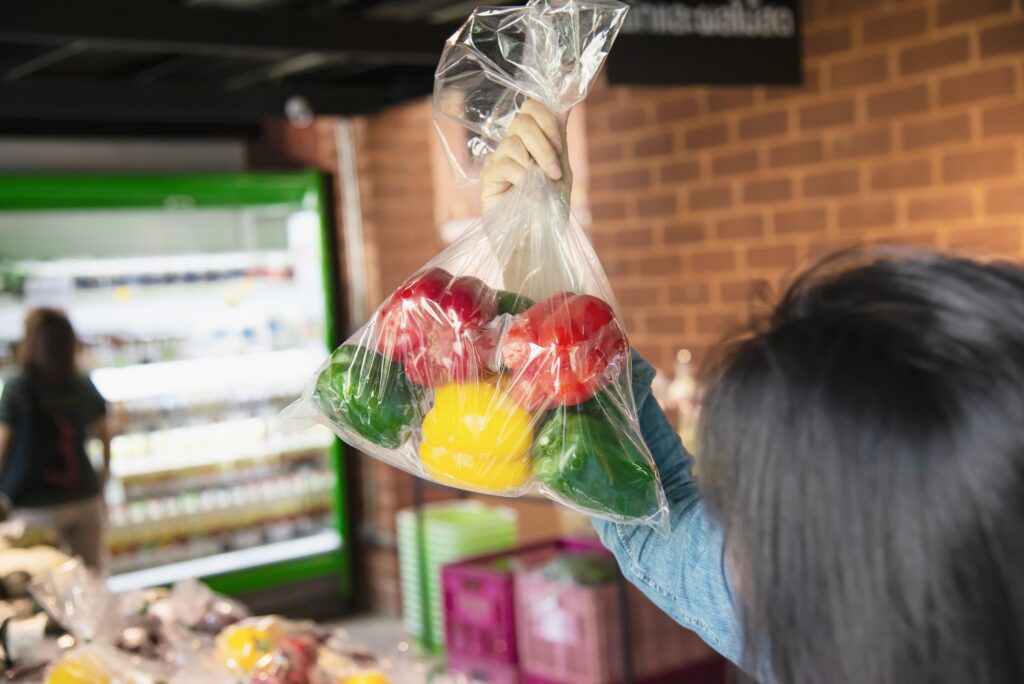
In other words, plastic bags may be cheap for consumers, but they are costly for society, public finances and the environment.
To move now and concretely towards sustainable production, Benedicto points to two urgent priorities. First, regulation: “Legislation should ensure that it is possible to upcycle agro-industrial waste to avoid extracting more materials from nature”. Second, scale: “economic support for large-scale production is needed to support the initial phase, when production volumes are low”.
Packaging and Packaging Waste Regulation: a real push for bioplastics?
Amid fierce competition in the bioplastics market, the EU’s Packaging and Packaging Waste Regulation 2025/40 (PPWR) will become mandatory across all member states from August 12, 2026. Under the regulation, by 2030 all packaging placed on the EU market must meet a minimum recyclability threshold of around 70%, or it will no longer be allowed. This requirement will tighten over time. The PPWR also introduces mandatory recycled content targets for plastic packaging (10–35% by 2030), binding waste reduction targets starting at 5% by 2030, and effectively PFAS-free food-contact packaging, with only trace-level thresholds permitted.
But will this translate into a real boost for bioplastics?
“My view is that PPWR is necessary, but it is not sufficient on its own – Fernández Ayuso says – Wider adoption will also depend on whether these materials can meet the performance standards expected by industry while delivering clear environmental value”.
“This legislation is generally for plastics. It’s an opportunity for bioplastic solutions, but also plastic that is not bioplastic is recyclable…”, Benedicto adds. The PPWR greenlights biodegradable and compostable materials only for high-impact niches, like fruit and vegetables labels, tea and coffee filters, delivering instant wins. Yet it offers no broad push for bioplastics, while a lot of experts demand game-changing quotas to supercharge them – for them to win the materials race and to fill the gap with Asian bioplastic production.
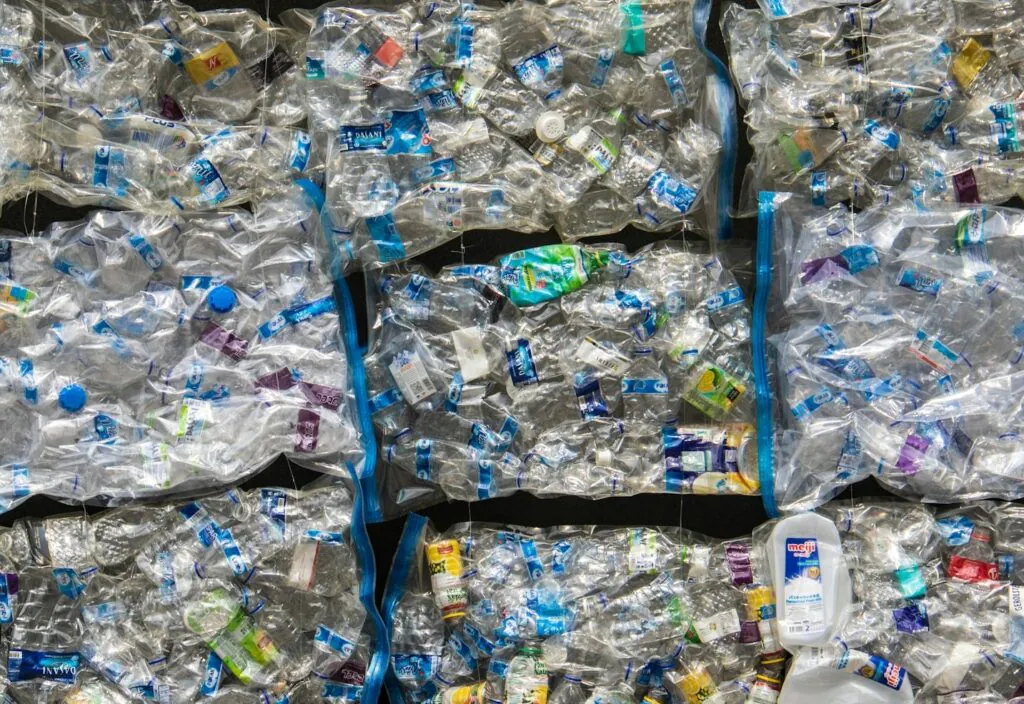
From poultry waste to food packaging: the end of plastic wrap as we know it?
With plastic pollution suffocating the planet, a new generation of bioplastics could change the game. Made from poultry waste, it replaces fossil-based polymers with biobased ones, bringing us closer to truly sustainable packaging. But experts warn: “For this to be a revolution, policies must support the sector.”
A fire is raging through a house. Half of it is already in ashes; the other half might still be saved but all we have is a bucket of water. That fire is the mountain of plastic waste we’re producing, growing ever larger and smothering the environment. The bucket of water is bioplastics: a natural remedy but not a definitive solution.
The numbers are staggering: in 2022, each European citizen generated 186.5 kilograms of packaging waste, 29 kilos more than in 2011. Of that, 19% was plastic packaging waste, and only 41% of it was recycled. According to the UN, if we continue at this pace, by 2050 there could be more plastic than fish in the ocean by weight. Food packaging is one of the main culprits in this pollution crisis: nearly 37% of all food sold in the EU is wrapped in plastic.
In response, a wave of “green” alternatives has flooded the market: compostable plates, bioplastic cutlery, “eco” paper containers. But for anti-plastic activists, the issue isn’t only what we use, it’s how much we use. “We have an increase in the use of packaging and especially single use. Consequently, the EU’s total packaging waste rose by some 20% over the last ten years. So first we must reduce packaging. We advocate for possible not using any packaging whenever that’s possible,” says Samy Porteron, Programme Manager at ECOS, an NGO that is part of the Break Free From Plastic movement.
Fast food chains are in the spotlight for the mountains of single-use packaging waste they generate, even when using supposedly sustainable materials. “When we talk about restaurants you can obviously be using washable and reusable plates and cutlery. When we talk about delivery, we’ve been advocating for systems that could also use reusable packaging, to complement promoting the practice of bringing your own packaging” Porteron adds. The key, they say, is to wash and reuse: plates, glasses, and cutlery made of ceramic, glass, metal, or other durable materials.
But if single-use plastic has been phased out in Europe and most materials on the market are “eco,” why isn’t it working? Biodegradable. Compostable. Recyclable. Biobased. The words may sound similar, but they’re far from interchangeable. A bioplastic can come from natural sources but still be neither recyclable nor compostable and may contain harmful additives. Many bioplastics only break down under very specific conditions and often contain the notorious PFAS: persistent, endocrine-disrupting forever chemicals that leach into the environment. “People might not understand that a biodegradable plastic should not be thrown in the environment because it might not actually biodegrade as quickly as you think. They might not understand that a compostable product should not be recycled, for instance. Instructions for citizens for the separate collection of biodegradable plastic differ from one municipality to another, adding to the confusion”, adds Porteron, pointing out that despite much educational effort, there’s still a long way to go.
There’s also the trap of “mixed” food packaging, paper lined with plastic, for example, which most consumers don’t separate or recycle. “Consumer habits are hard to change. It’s difficult to imagine fruit or bread packaging without a plastic window to see the product,” explains Prospero Di Pierro, professor of biochemistry at the University of Naples Federico II.
In short, the devil is in the details in our daily routines. So, what’s the path forward? “PHA biopolymers are the best candidates to replace plastic. Within this family, there’s PHB: imagine a pearl necklace where each pearl is made up of 4 carbon atoms and 2 oxygen atoms (hydroxybutyrate). This gives it better technological characteristics and makes it the most promising material in current research. The addition of external molecules such as valerate to improve the polymer’s properties raises the cost if microorganisms capable of autonomous production are not available,” Di Pierro adds.

Figure 1: reactors for the fermentative production
Still, producing this biopolymer comes with major challenges, starting from the pretreatment of the food waste used as raw material, to issues with logistics, transport and cost. Pretreatment is essential: to produce PHA at scale, microorganisms need to be fed with a carbon-rich but nitrogen-poor substrate. Processes like deproteinisation or fermentation are expensive and not always scalable. “Then there’s the logistics. Transporting highly perishable materials to biopolymer factories is complex. Setting up facilities near food industries? Culturally, it’s hard to convince food producers to start making bioplastics and economically it doesn’t work yet, because bioplastic, being much more expensive than conventional plastic, isn’t competitive without incentives,” Di Pierro explains.
These are precisely the challenges that the European ViSS project aims to solve. Its goal? To sustainably and scalably produce PHB biopolymer, free from PFAS, using waste from the poultry and sugar industries.
“This project arose from the need to substitute fossil-based polymers by biobased polymers. Our polymers are biobased and biodegradable, produced by microorganisms; they are completely safe and biodegradable in all environments: in soil, in freshwater, in seawater because we only add safe and sustainable additives,” says Carmen Fernández Ayuso, PhD, head of coordination and R&D management at CETEC in Murcia, Spain, and ViSS project coordinator. The additives don’t interfere with the degradation process. “This is an innovative approach in our project because we design the polymer taking into account the end of life to ensure a safe biodegradation and not endangering the environment and the health of users,” she adds.
Practically, the process begins with poultry waste, feathers and bones, and sugar industry by-products, all sourced locally to cut transport costs. “Also, we use plastic reactors instead of steel reactors that are costly,” explains Fernández Ayuso, and the whole process runs under non-sterile conditions, saving even more. A microorganism digests the substrate and starts accumulating PHBV inside its cells. This is then extracted and purified to produce a biodegradable powder or plastic granule, ready to be formulated and turned into film, packaging or other items. “One of the main points is that in our process, our product has 15 to 30% of hydroxyvalerate. That makes it less crystalline and it has flexibility”, adds Fernández Ayuso, solving one of the biggest limitations of this type of bioplastics: their rigidity.

a PHBV film
If PHBV biopolymer production can be scaled cost-effectively, it would mark a real revolution in the world of plastics. But one final hurdle still stands: the price. Experts are calling for policies that support the sector, to make bioplastic produced in Europe competitive, not 2 or 3 times more expensive than fossil-based plastic, and not outpriced by extra-EU imports. In short: to give it the power to put out the fire.
Article by Gioia Salvatori
Photos by CETEC.