


Citizen Science initiative: marine litter cleanup at Agua Amarga Beach
A citizen science initiative focused on marine litter cleanup will take place on the 9th of November
Within the ViSS project activties, the Voluntariado Ambiental Universidad de Alicante and the BioplasticLab of the University of Alicante organise a cleanup event happening at Agua Amarga beach.
The activity aligns with the project goals by actively engaging the local community in environmental conservation efforts through structured data collection methodologies. Registration is open to individuals who are enrolled in the environmental volunteering program at the University of Alicante. Register here and sign up here.
The ViSS project continues to advance the development of a sustainable value chain for PHBV in food packaging applications. The project’s objectives include promoting environmental awareness, enhancing community involvement, and fostering innovative solutions for waste management in coastal areas. During the initiative, participants will receive an overview of how the Marine Litter Watch app works. The tool, developed by the European Union, tracks waste collected on beaches.
Picture credits: Pexels
ViSS progresses towards sustainable plastics solutions
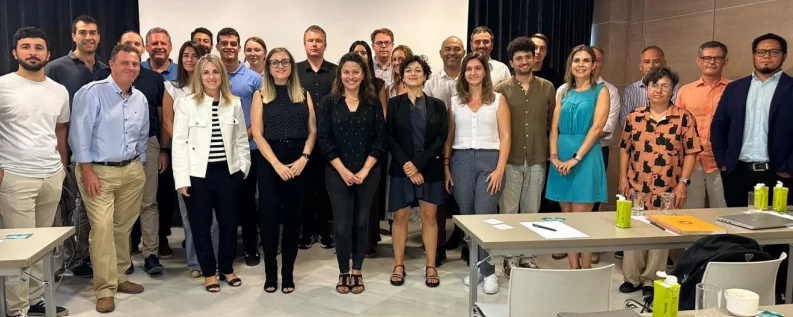
The consortium partners met in Sevilla for the Third General Assembly
The gathering was an occasion for reviewing progresses after the first year of the project and planning future actions. The focus was on evaluating the work’s current status, from residues management to PHBV formulation processes.
Updates were shared on the optimisation of fermentation processes for the production of PHBV, which will be a constituent of the final plastic product. Preliminary plans for PHBV formulation, compounding, and small-scale validation were discussed. The project is using different techniques to identify optimal approaches at a small scale. Mathematical modelling is playing a key role in supporting industrial scaling and facilitating decision-making.
The project coordinator, José Antonio Plaza, emphasizes the importance of this milestone in leading the project towards new achievements:
ViSS project is advancing towards the upscaling of PHBV production processes while applying novel approaches across the whole value-chain, which will further help decarbonise the plastics industry while making it safer and more economically and socially sustainable.
Indeed, the project’s results aim to develop a sustainable bio-based and biodegradable plastic that meets the requirements of various applications, such as short shelf-life food packaging. This plastic avoids the use of hazardous substances, ensuring they are non-toxic while preserving the biodegradability of PHBV, in line with the Safe and Sustainable by Design (SSbD) framework, which also addresses the social readiness and marketability of ViSS novel solutions.
ViSS is advancing towards a circular business model representing a shift away from fossil-based plastics in food packaging.
Photo credits: Juan Antonio Pavón Losada

ViSS strategy at the international conference on bio-based and biodegradable polymers
The BIOPOL Conference was a significant opportunity that brought together experts in the field of biopolymers and biodegradable composites.
The ViSS project attended the 9th BIOPOL Conference that took place in Coimbra, Portugal at the end of July 2024. With the support of the University of Alicante, the project had the opportunity to share findings on PHBV production by agro-food industry waste materials.
The ViSS project introduced its methodology of PHBV production for food and drink packaging applications. The use of PHBV in packaging manufacturing offers a sustainable alternative to conventional plastics. The results presented in the poster “PHBV-based Materials for Food Packaging Applications” by CETECBIO associate Salvador García Chumillas, highlight the potential of using agricultural waste to create high-valuable and cost-effective sustainable bioplastics.
Along with ViSS project’s findings, CETECBIO also presented the work titled: “PHBV production and agri-food valorization employing Haloferax mediterranei as cell factories”, in the framework of Agro2Circular, a EU project boosting the upcycling of agri-food wastes by reusing these to produce new food, cosmetic and nutraceutical formulation.
Read more on LinkedIn
Image credits @wirestock on Freepik
ViSS strategy for a SSbD framework in the production of bioplastics
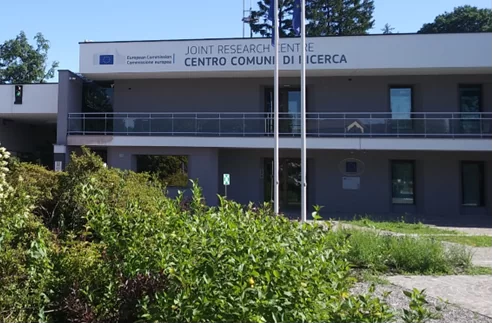
Last week, the project partner Kveloce presented the Safe and Sustainable by Design (SSbD) framework which will be used to address the social readiness and marketability of ViSS novel solutions. The presentation was held at the Joint Research Center (JRC) in Ispra, Italy.
SSbD leverages the existing approaches to provide indicators, methodologies and tools for safety, environmental, social and economic assessment of new products. With this purpose, Kveloce has been working together with other project partners, IDENER and VTT, on the ViSS SSbD framework. This framework will be followed to assess ViSS novel solutions on food packaging bioplastics to assure that they fulfil SSbD standards, thus contributing to the acceleration of the circular economy transition through innovative, safe and sustainable materials.
In the meeting, the importance of designing practices considering the tri-dimensionality nature of sustainability (environmental, economic and social) was highlighted. Indeed, ViSS SSbD strategy is focused on balancing criteria across the full material cycle, from design to end-of-life of the PHBV value chain.
Photo credits: José Benedicto by Kveloce

Collecting data on plastic pollution: a practice beyond beach cleaning
The Bioplastic Lab from the University of Alicante and the ViSS project organise a beach cleaning on the coast of Calpe, Spain
Combining traditional beach cleaning practices with the innovative approach of citizen science. This is the lesson the research team taught to engage students in the preservation of nature last May.
Participants were not only committed to collecting plastic items but also to documenting materials found using a standardised classification system. The data was uploaded to the Maritime Litter Watch app, which is a valuable resource for environmental managers and policymakers. This information helps them design more effective strategies to combat plastic pollution. Additionally, the data becomes easily accessible to the public, which promotes awareness and understanding of marine pollution.
The event took place over two days, including roundtable discussions and presentations where participants become an active part of the initiative.